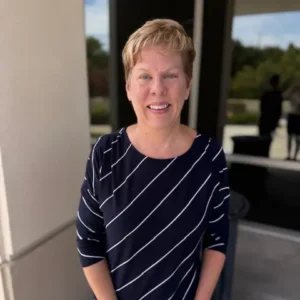
Moving a loved one into memory care doesn't mean losing comfort, routine, or dignity. Kristin Cherry, Family Advisor at Story Cottage, shares how the boutique model works, how to know when it's time, and why choosing memory care is really about choosing support.
What makes the Story Cottage boutique model different?
Our boutique model is what makes Story Cottage very different. Our model is intentionally small. That isn't a marketing line. It's the entire foundation of how we provide care.
Because each home is small, we get to truly know each resident:
Their routines
Their preferences
Their stories
When you only have 8 to 10 residents, the care can actually be personal. The team isn't trying to remember 60 names and 60 histories. They're walking alongside a small group of people they genuinely know. You can see how that plays out across our Story Cottage homes in Indianapolis and Carmel.
Why does building care around the person matter?
We create a rhythm to the day that feels natural, not institutionalized. We provide care that adapts as needs change.
It's not about fitting someone into a system or a schedule the staff already has. This is about building care around the person.
That distinction matters more than it sounds:
A natural rhythm reduces agitation and confusion
Care that adapts keeps pace with dementia instead of falling behind it
A schedule built around the person preserves dignity in the small moments, like meals, mornings, and bedtime
Spring often brings change. Families start visiting more. Noticing more. Asking harder questions.
After a long winter, you walk in and suddenly see things you didn't see before. The missed medications, the unopened mail, the meals that aren't getting eaten, the small safety incidents that have been quietly piling up.
It's a season where a lot of families finally say out loud what they've been feeling for months. Something has to change.
How do you know when staying home is no longer safe?
Sometimes it becomes clear that staying at home is no longer a safe option. The signs are usually a pattern, not a single moment:
Wandering, leaving the stove on, or other safety incidents
Increasing confusion about time, place, or familiar people
Caregiver burnout, like exhausted spouses or adult children stretched thin
Falls, missed medications, or weight loss
A loved one becoming more isolated or withdrawn
If those things sound familiar, you're not overreacting. You're paying attention. A no-pressure conversation with our team can help you sort through what you're seeing.
What do families need to know about transitioning to memory care?
This transition can feel overwhelming. But what families need to know is this. There are options like Story Cottage that feel like home.
Moving into memory care does not have to mean losing comfort, routine, or dignity. Done right, it actually protects those things, because the right environment is built specifically to support them.
Why is choosing memory care actually choosing support?
One of the biggest mindset shifts we try to offer families is this. Choosing memory care is not giving up. It's choosing support. It's choosing safety, connection, and quality of life.
And often, when the environment is right, we see something remarkable. Residents become more at ease, more engaged, and even more themselves.
That's the part families don't expect. They brace for loss, and instead they get a version of their loved one back, even if just in moments. That happens because the weight of trying to stay safe at home gets lifted, and the person underneath the diagnosis has room to show up again.
What's the message for families navigating this right now?
If you're reading this and you're in the middle of navigating dementia with someone you love, you're not alone.
These decisions are not easy. They don't have to be made in isolation.
At Story Cottage, we're here to walk alongside families, answer questions, and offer a different kind of care experience. If you'd like to talk through what your family is facing, even if you're not sure you're ready, please reach out. I'd be glad to help.
"Choosing memory care is not giving up. It's choosing support. It's choosing safety, connection, and quality of life."
— Kristin Cherry, Story Cottage
Frequently Asked Questions
What is the Story Cottage boutique model?
The Story Cottage boutique model is an intentionally small approach to memory care, just 8 to 10 residents per home, designed so the care team can truly know each resident's routines, preferences, and story. It's care built around the person, not around a facility schedule.
How do I know when it's time to move a loved one out of their home?
Common signs include safety incidents like wandering, falls, or a stove left on, along with missed medications, increasing confusion, caregiver burnout, weight loss, and growing isolation. When the pattern is consistent and not a one-time event, it's usually time to start the conversation about memory care.
Will my loved one lose their routine, comfort, or dignity in memory care?
Not when the environment is the right fit. Story Cottage is built to protect routine, comfort, and dignity, with consistent caregivers, a natural daily rhythm, and care that adapts as needs change rather than forcing the person into a fixed schedule.
Is choosing memory care giving up on my loved one?
No. Choosing memory care is choosing support, safety, connection, and quality of life. Many families find that, in the right environment, their loved one becomes more at ease, more engaged, and more themselves than they were at home.
What does spring often brings change mean for families?
After winter, families often visit more, notice more, and ask harder questions. It's a common season for families to finally acknowledge that something needs to change, whether that's bringing in more help, exploring memory care, or starting tours.
How do I get in touch with Kristin Cherry at Story Cottage?
You can reach Kristin and the Story Cottage team through the website's contact page or by requesting a tour. Kristin works directly with families as a Family Advisor and can walk you through what to expect, what to look for, and what your options are.
Kristin Cherry
About the Author
Kristin has over 30 years of experience in Independent Living, Assisted Living, and Memory Care, with advanced degrees in Gerontology, Family Services, and Counseling. She has held leadership roles including Executive Director, Regional Sales Manager, Divisional Sales Manager, and VP of Sales and Marketing for several large companies. Kristin is also a recognized speaker on senior care topics, presenting throughout the Midwest on Alzheimer’s Disease, Assisted Living vs. Nursing Homes, and Memory Care Programs.
She has received multiple awards, including the BGSU Gerontology Program Partnership Award and the Resident Director Best Practices Award, and has been recognized locally for her leadership in team development. Kristin is also President of the Indiana Kappa Delta Alumnae Association and actively consults with alumnae navigating senior care options for their loved ones.
Outside of work, Kristin and her husband, Dave, who have been married 33 years are dedicated Great Dane Rescue fosters, having fostered and placed nine dogs into loving homes. Kristin has a daughter, who just got married and works at Purdue. Follow her on LinkedIn.